Pages

Hiển thị các bài đăng có nhãn visit vietnam. Hiển thị tất cả bài đăng

Thứ Sáu, 20 tháng 11, 2015

Most travelers to Vietnam

Most travelers to Vietnam are attracted by the wonderful natural beauty of the stunning S-shaped country, from extensive rice terraced fields in the north to the fascinating bustle of the Mekong Delta in the south. Furthermore, clear natural beaches are also the amazing tourist attractions in Vietnam.
Recently, Lonely Planet, the world’s famous tourist site, has chosen top 7 beaches you should visit at least once in life in Vietnam.
Phu Quoc Island

Located in front of the Cambodia coast, Phu Quoc is the largest island in Vietnam. The island features pristine tropical forests, colorful coral reefs, and great beaches, which is the favorite destination of tourists to enjoy the peaceful and tranquil atmosphere as well as admire the wild beauty of long beaches, natural forests, and pure streams.


Come to Phu Quoc, besides swimming, walking in the night markets, and discovering famous pearl farms, you can also visit scenic spots such as Dinh Cau, Bai Dai, Bai Sao, Phu Quoc prison, myrtle forests, and pepper gardens.  In addition, Phu Quoc is famous for producing the best fermented fish sauce in the world. Therefore, paying a short visit to some fish sauce manufacturing places is also a good idea for your trip.
read more >> vietnam things to do 
Con Dao Island

80 kilometers from the Mekong Delta and 230 km from Ho Chi Minh, Con Dao Island used to serve as a prison for political prisoners during the French colonial period. However, due to immense natural beauty, Con Dao today turns into the heaven of nice resorts, which attracts numerous domestic and international tourists.
Visit Con Dao, you can explore historical relics and experience the special activities like swimming in the clear sea, walking on white sand beaches, diving into pure beaches, or driving along deserted coasts. Moreover, don’t forget to enjoy typical seafood here.

welcome in Sapa !
Mui Ne

Mui Ne is located on the east coast of Phan Thiet, Binh Thuan province, about 250 kilometers from Ho Chi Minh City. It’s famous for the beautiful beaches with strong waves, huge red sandy dunes as desert, and delicious dishes made from seafood. Moreover, Mui Ne is the kingdom of resorts and one of the most favorite places for those who are fans of beaches to relax and enjoy interesting vacations.
In addition, Mui Ne also possesses a lot of unique destinations like Rom Island, Lao Cao Island, Rang Beach with pristine beaches, majestic landscapes, and fresh air. Especially, in early 2013, Mui Ne was listed in Top most beautiful beaches in Southeast Asia by Skyscanner.

Thứ Tư, 18 tháng 11, 2015

Places caffe in ho chi minh

A small 8% of Vietnamese people are drinking domestically produced coffee despite that the country is ranked as the second largest supplier of coffee in the world. The Vietnamese don’t have the strong habit of grabbing coffee to go like what people usually do in North American. For them, caffeinate means taking a break from the heat and chilling in one of the country’s omnipresent cafes scattering across the country.


Many visitors fall in love with the hustling nightlife of Saigon (Ho Chi Minh City). The city is in the process of developing and growing into one of Vietnam’s most ebullient economic centers, yet it still manages to maintain the strong café culture.
It would be impossible to say the following café are the best in the city. It would take years to visit them all. Anyway, here are one of the most worth to visit mausoleum ho chi minh
Up CAFÉ
269 Nguyễn Trọng Tuyển Street
Tel: +840928 269 269
It’s the ceiling décor, which comprises table and chairs, a piano precariously hung upside down over customers’ heads, on the second floor makes the café stand out. However, a huge flaw is those awfully huge couches that set private partitions and ruin the space.
Additionally, the music is overly sappy. If you intend to visit the place, go with a friend and make a bet about what song is on. Your friend will hear “My heart will go on”, otherwise you pay for the coffee.
The café was put into lots of effort and it could be so nice with a couple of small changes. The place falls under “go once one and see” category rather than as a regular place to work or meet.
Du Mien CAFÉ
48/9A Hồ Biểu Chánh, Ward 11, Phú Nhuận District.
It’s a bit difficult to find this hidden place, but that’s also a part making it special. The foreign crowd never seems to come around here, therefore, it feels exotic and local. Du Mien is a big, terraced café with some pools, yet it is in need of some refurbishing. The ambiance is quite impressive and relaxing, at least on weekdays.

Thứ Tư, 11 tháng 11, 2015

“Danh du” or Bamboo Swing


Đánh đu (Bamboo swing) is one of the popular traditional games in Vietnam’s Northern Delta in spring. It involves two people standing on the wooden platform and swinging as high as possible.


Bamboo swing came into existence in Vietnam long time ago in the Ly Dynasty. It’s often held during spring festivals.

Preparation

Swing is often built on a dry and large space so that spectators can stand around four sides.
more >> old quarter hanoi

It consists of frames, handles, and platforms. The frame is made of solid bamboo. The handles which are also made of bamboo need to be straight, wide enough for a person’s palm, and no knot. The platforms need to be close enough to the ground so that players can easily jump on.

They also need to pick the right bamboo to ensure safety. While young bamboo is weak, old bamboo tends to break.


Rules

Two kinds of bamboo swing are single and couple swing. In couple swing, two people will stand on the swing platform, face to face. They will press their feet against platform then bend their knees. Then the swing will gradually move like a pendulum.
read more :temple of literature hanoi

The two players need to swing as high as possible. When they reach the highest point, one needs to stretch a hand to snatch the prize. This requires both players to be clever, and calm. They will lose if they drop the prize.oy of Vietnamese children
vietnam things to do

Traditional toy of Vietnamese children - Tò he

Tò he or Toy figurine, a traditional toy for Vietnamese children, is made from glutinous rice powder in shape of edible figurine such as heroes, flowers, animals, etc, 
HistoryThe origin of this traditional toy dated back to the 17th century. When there were not comics or illustrated books, tò he came out to depict characters in folk stories, heroes, animals, flowers, etc. Children were really interested in this tò he. They gathered around stall of to he, watched the heroes in elaborate costumes made by skillful hands of craftsmen and imagined the whole vivid world of fairies and heroes.

temple of literature hanoi
traditional toy
It was first made and sold on some typical occasions such as Tet and Mid-Autumn Festival. You can catch sights of to he in many public places and festivals now.
Xuan La Village in Phu Xuyen District,  visit Hanoi city is famous for its skill in making tò he. One interesting fact is that Tò he craftsman doesn’t pass his secret of making to he to his daughter but to his son.

MakingTo he craftsmen have a set of tools so that they can move to several common places in one day. They are a tray of glutinous rice powder in different colors, a bunch of sticks, a small comb, and a spongy box to display their products.
The preparation of the dough is the recipe for success in to he making. Rice after being grinded into fine powder will be mixed with water until it becomes a sticky lump. That lump will be put in a pot of water and boil for an hour until it is removed from the pot. The craftsman then dyes with seven different colors including green, red, yellow, white, black, red, and purple. These colors are made from edible and natural ingredients.

traditional toy
Nowadays, they no longer imbue the dough with natural colors but food colorings since they are more fresh and bolder.
The artisans have such an amazing ability to mould these lumps become a beautiful work of art. They use exactly the amount of paste to form separate parts of a toy.
Just place your own orders, watch the craftsman make the toy and get beautiful tò he in minutes.

Thứ Sáu, 6 tháng 11, 2015

Interesting about Vietnam

This is your chance to get some interesting information about Vietnam while you can enjoy below fun facts. This will definitely bring you enjoyment and pleasure.

#1 Vietnam – the S-shaped land
The first interesting fact about Vietnam lies in its shape. While Cuba is shaped like a crocodile, Italy is shaped like a boot; Vietnam’s shape resembles a letter S.
#2 Motorbikes are everywhere
The number of motorbikes in Vietnam has increased in the fast pace. You can see the overwhelming number of motorbikes in streets. There are about 39 million of motorbikes nationwide since it is an affordable means of transportation. Its price and tax are far much cheaper than a car. Motorbikes are everywhere.
A motorbike is used to transport all kinds of things
You may catch sights of people transporting giant packs of things just in their little motorbike and I guess you can never find out how they could handle that.

#3 Coffee paradise
Vietnam, the second largest producer of coffee in the world, is the paradise of coffee. You can find a café in every street corner. They are all tasty, aromatic. You may find various kinds of coffee in this country.
#4 White is beautifulWhile tanned skin is regarded as a sign of strength to Western people, Vietnamese considered that color as sign of low class of laborer working at the fields. To Vietnamese people, white color skin is the symbol of high class and is an ideal skin color. Hence, they wrap themselves up as much as possible when they go outside.
#5 The most popular family nameNguyen (Nguyễn), the most popular family name in Vietnam, shared by 40% of the population. This surname dates back to emperor period of Nguyen Dynasty.

#6 Kitchen god
Vietnam is the only country that has the deity for the kitchen – Ong Tao. On the 23rd day of the 12th month in lunar calendar, people will buy a carp – a means of transportation for Ong Tao to rush up to heaven and report to the God of Heaven what family members had done in that year.

Visit in Vietnam – How to make it more convenient?

Visit Vietnam can sometimes be awkward, sometimes disturbing. A few years ago, I had always thought that taking the train should only be my last resort. However, recently, I have learned a few things that can make your train ride a bit smoother.
Don’t be cheap

A cabin like this will make sure that you are ready for action in the morning
Getting a cheap seat means you’re going to share that space with the people who aren’t willing to pay for a seat. If you’re planning to travel just a few hours, then that might not be a problem. But if you’re taking a night train, believe me, this will be a pain. Just spend some extra Dong to get a bunk bed or an exclusive cabin. Make sure you get a good night rest to get enough energy for a day of excitement.
Book in advance, but not online
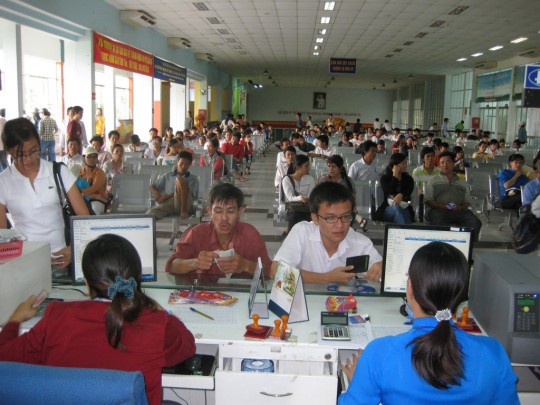
Online booking doesn't always work. So it's best to buy ticket at the station
Online booking doesn’t always work. So it’s best to buy ticket at the station
There are many ways for you to secure tickets in advance. However, booking tickets online is not one of them. Your booking would eventually get lost because of “reasons”. If possible, head to the station yourself to get the tickets a few days early. This will make sure that you get the desired seat while taking a train in Vietnam.
welcome sapa !
If you can’t make it to the station, ask the front desk of your hotel. For some extra cash, they will get you the tickets.
Prepare food and power
You can get some refreshments on the train, though I wouldn’t recommend them. They don’t cost much. They just suck. There are no breaks on the trip long enough for you to get out and buy something. So it’s best if you just pack some snack for the road. Also, there is no way to charge your phone on the train. So make sure that your devices are fully charged, and bring some backup batteries as well.
Short distance makes taking a train in Vietnam better
If you’re only planning to spend 2-3 hours on the train, there shouldn’t be any problems at all. Instead of spending many hours on a train, why not consider making multiple pit stops along the way? Our website has information on every city and province of Vietnam. So no matter where you choose to visit, there is always something worthwhile. Consider this option if you are a fan of spontaneous exploration and willing to take the time.

Thứ Năm, 5 tháng 11, 2015

The Temple of Literature ( Văn Miếu)

The Temple of Literature (Văn Miếu, 文廟) (known as Văn Miếu - Quốc Tử Giám in Vietnamese) is a Temple of Confucius in Hanoi, northern Vietnam. The temple hosts the "Imperial Academy" (Quốc Tử Giám, 國子監), Vietnam's first national university. The temple was built in 1070 at the time of King Lý Thánh Tông. It is one of several temples in Vietnam which is dedicated to Confucius, sages and scholars. The temple is located to the south of the Imperial Citadel of Thăng Long. The various pavilions, halls, statues and stelae of doctors are places where offering ceremonies, study sessions and the strict exams of the Đại Việt took place. The temple is featured on the back of the 100,000 Vietnamese đồng banknote. Just before the Vietnamese New Year celebration Tết, calligraphists will assemble outside the temple and write wishes in Hán characters. The art works are given away as gifts or are used as home decorations for special occasions.

The temple was built in 1070 and was reconstructed during the Trần dynasty (1225–1400) and in the subsequent dynasties. For nearly two centuries, despite wars and disasters, the temple has preserved ancient architectural styles of many dynasties as well as precious relics. Major restorations have taken place in 1920, 1954 and 2000.
see more other places in vietnam : things to do in ho chi minh
"In the autumn of the year Canh Tuat, the second year of Than Vu (1070), in the 8th lunar month, during the reign of King Lý Thánh Tông, the Temple of Literature was built. The statues of Confucius, his four best disciples: Yan Hui (Nhan Uyên), Zengzi (Tăng Sâm), Zisi (Tử Tư), and Mencius (Mạnh Tử), as well as the Duke of Zhou (Chu Công), were carved and 72 other statues of Confucian scholars were painted. Ceremonies were dedicated to them in each of the four seasons. The Crown Princes studied here."
In 1076, Vietnam's first university, the "Quốc Tử Giám" or Imperial Academy, was established within the temple to educate Vietnam's bureaucrats, nobles, royalty and other members of the elite. The university remained open from 1076 to 1779. In 1802, the Nguyễn dynasty's monarchs founded the Huế capital where they established a new imperial academy. The academy at the Hanoi temple lost its prominence and became a school of the Hoai Duc district.

You can see more: best things to do in vietnam

Under the French protectorate, the Temple of the Literature was registered as Monument historique in 1906. Campaigns of restoration were pursued in 1920 and 1947 under the responsibility of École française d'Extrême-Orient (French School of the Far East) and again after the World War II.


The King Lý Thánh Tông built the school. It was built in 1076 AD at the time of King Lý Thánh Tông. It was built as a school for the rich and royals to study because education is very important. After that, it was used as university for everyone because there weren't enough universities for everyone in Hanoi. They wanted that a lot of people would go to the school so they expanded to make more space for more people and since it was expanded for more people wanted to go to the school to study well. It was rebuilt because the wood that the kings used in the olden days had been so old that it started to break and fall apart. As the days went by, the kings kept replacing the wood and now we have replaced the wood with concrete or metal,stone and new wood. When the French ruled Vietnam at around 1945- 1954, they destroyed some parts of the temple for sick people and wounded people since the hospitals were full and there was no where for people to go when they are sick or wounded.

10 Top Tourist Attractions in Hanoi

This capital city of Vietnam once served as the headquarters of the North Vietnamese communist army. Today, it provides a beautiful and educational window into a country that is most often visited through the Southern, tropical Ho Chi Minh City, once called Saigon. Where the South is palm trees and beaches, the North is tall, sharp rocky mountains full of waterfalls, deep emerald waters with pearl farms, and a culture that is as unique as it is beautiful.
A visit to Hanoi provides travelers with a fascinating blend of East and West. There are bustling streets full of bicycles, motorbikes and cars; an elegant blend of Asian Pagodas, communist block buildings and French Colonial relics; and there are a host of fun and unique attractions in Hanoi for the adventurous traveler.
One Pillar Pagoda
If Buddhists were to build a treehouse, it would likely look a lot like this. This eleventh century temple was built by the emperor in gratitude for finally being blessed by a son. The temple was meant to look like a lotus flower blossoming from a single pillar in the pond, similar to the one seen in the prophetic dream of a child that this emperor had received. Inside, there is a small shrine to the Bodhisattva of Mercy. The current structure is a rebuild, as the French had the first destroyed after their retreat from the country.

Hanoi's West Lakeflickr/Francisco Anzola
This largest urban lake is a favorite location for tourists and Hanoi residents alike. It is where the high-end homes of Hanoi’s wealthy live, and contains a large number of hotels, restaurants, and luxury shops as well. It has been a popular location for residents here for thousands of years, and is home to one of Hanoi’s four sacred temples, as well as the oldest pagoda in the city. This pagoda, dating back to the sixth century, can be found on an island in the center of the lake. Boating, sightseeing, and shopping along the boardwalk are common activities here, and well worth the trip.
Thang Long Water Puppet Theaterflickr/charles chanThis theater celebrates a peasant art form that began in the rice paddies over a thousand years ago. Puppets were simply carved and puppeteers would stand in the water of the paddies, using it as a prop, and act out traditional activities like farming, or legends like the golden turtle and the emperor. The more modern version continues the use of water and audience participation. Traditional Vietnamese instruments perform an opera that narrates the puppets’ actions, and musicians will interact with puppets, encouraging the heroes and warning them of impending danger. Guests of the theater needn’t brave the monsoon weather that once would pour on outdoor audiences, but can sit and enjoy a meal while discovering this ancient dramatic art.

Ho Chi Minh Mausoleumflickr/archer10The final resting place of Vietnamese communist leader Ho Chi Minh sits in Ba Dinh square, the location where he read the nation’s declaration of independence in 1945. This tall, blocky pillared building is modeled after Lenin’s crypt in Moscow and meant to evoke a traditional communal house, though to many tourists it looks like a concrete cubicle with columns. Contrary to his desire for a simple cremation, the embalmed body is on display in plexiglass casing, and a dress code of long sleeves and pants is required to visit. The mausoleum is closed for a couple months around the end of the year, when the body goes to Russia for maintenance.
Ho Chi Minh Presidential PalaceBehind Ho Chi Minh’s Mausoleum is a humble stilt house, where Ho Chi Minh supposedly lived in the 60s, though some claim that it would have been too risky during the war for him to live here. The house is an interpretation of a traditional rural dwelling, and has been preserved just as Ho left it. It’s set in a well-tended garden next to a carp-filled pond. It shares grounds with the much more luxurious and impressive Presidential Palace built for the French Governor of the Indochina colony in the early 1900’s. The palace is now used for official receptions and isn’t open to the public.


Hanoi Hiltonflickr/Ken McChesneyThe Hoa Lo Prison, sarcastically coined the Hanoi Hilton by American POWs, was originally built by the French to house Vietnamese political prisoners. The North Vietnamese Army later used the prison to house prisoners of war during the Vietnam War. Well known figures such as Senator John McCain, James Stockdale and Bud Day were just a few of the many prisoners of war that spent time in this prison. Two thirds of the prison was torn down to make way for the Hanoi Towers; the rest was turned into a museum and is now a popular tourist attraction in Hanoi. In 1999 a Hilton Hotel opened in Hanoi and was carefully named the Hilton Hanoi Opera Hotel.
Vietnam Museum of Ethnologyflickr/namhoLike many colonial regions that were united by European rule, the country of Vietnam is actually a coagulation of 54 different officially recognized ethnic groups. The Museum of Ethnology strives to give a better understanding of each one, and does so quite elegantly. It is widely believed to be the best of all the modern museums in Vietnam. Displays include a combination of art, everyday objects, and historic artifacts to better tell the story of each unique culture.

Temple of LiteratureThis is one of the temples of Confucius, and home of the nation’s first university. Originally built in 1070, the temple is meant to honor all scholars. Today, calligraphists will come and write good will wishes in Han characters during the Asian New Year at the steps of the temple, to give as gifts. The temple was built to replicate Confucius’ birthplace, with five courtyards and various temples and other buildings throughout the expansive grounds. Of special note are the Stelae of Doctors, a series of over 100 carved blue stone turtles, which honor the names of all who pass the royal exams.
Hanoi's Old Quarterflickr/Andrea SchafferThe old quarter is a mesh of the old and the new, as antique narrow streets snake between old brick buildings, covered in modern motorbikes and street vendors. This region of Hanoi is a mix of French Colonial architecture and ancient temples, and sits along the shore of Hoan Kiem Lake. It is the center of many attractions in Hanoi, from temples to the water puppet show to its street market. As the quarter was designed around the market, you will find that the streets here are all named for the kind of products that were once sold along its sidewalks, from wood to silver to paper.


Hoan Kiem Lake
Known as the lake of the returned (or restored) sword, this lake marks the historical center of ancient Hanoi. The name comes from a legend in which Emperor Le Loi was given a magical sword by the gods, which he used to drive out the invading Chinese. Later, while boating on the lake, he encountered a giant turtle, which grabbed the sword and carried it down to its depths, Every morning at around 6am local residents practice traditional t’ai chi on the shore. The lake also houses Jade Island, home of the eighteenth century Temple of the Jade Mountain. The island is reachable via the red-painted and picturesque Morning Sunlight Bridge.

The Best places to visit in VietNam

 A long, narrow country squeezed in between the South China Sea and the Laos and Cambodia borders, Vietnam is a land of striking landscapes that range from the lush rice terraces and forested mountains in the north to the picturesque valleys of the Central Highlands and the fertile delta and beautiful beaches of the south. Included in the mix are booming modern cities, colonial towns, traditional villages, archaeological sites and otherworldly islands. An overview of the best places to visit in Vietnam.
Best Hotels in Hanoi
Dalat Climate
Year-round cool weather and idyllic scenery of misty valleys, lush pine trees and colorful flowers are some of the reasons that Dalat was once used by Vietnamese emperors and French colonials as a summer retreat. Today, this charming town in the South Central Highlands of Vietnam is a popular destination for those looking for relief from the heat. A walkable city, Dalat is a beautiful scene of French colonial architecture and villas set amid picturesque landscapes.

My Sonflickr/besar bears
Located on the central coast of Vietnam near the Duy Phú village is the important archaeological site known as My Son. One of Southeast Asia’s most notable ancient sites, My Son was once a significant center of religious Hindu ceremonies where the kings of the Champa Kingdom built numerous temples devoted to the worship of the god, Shiva, between the 4th and 14th centuries.
Ho Chi Minh City Climate
Lying along the Siagon River near the Mekong Delta in southern Vietnam, Ho Chi Minh City was formerly known as Saigon and served as the capital of South Vietnam during the Vietnam War. Today, Ho Chi Minh City is the largest city of the reunified country, offering plenty of reasons to visit, from its blend of historic and modern attractions to vibrant shopping, dining and nightlife.
Hue Climate
Situated on the banks of the Perfume River in Central Vietnam, Hue once served as the imperial capital of the Nguyen dynasty. Today, the vestiges of this former glorious period are reflected in the city’s architecture, culture and cuisine, making it one of the best places to visit in Vietnam. Of the city’s monuments, the Citadel is the most famous. Once the seat of the Nguyen emperors, the Citadel is a sprawling complex of grand palaces, ornate temples, walls and gates Another important landmark on the river is the city’s official symbol, the Thien Mu Pagoda.

Mekong Deltaflickr/jorgecab
Colorful floating markets, fruit orchards, rice paddies, sugar cane groves, bird sanctuaries and quaint villages are all what draw many to the Mekong Delta in southwestern Vietnam. Nicknamed “Vietnam’s Rice Basket,” the Mekong Delta is an agricultural region made fertile by the maze of canals and streams fed by the Mekong River. Stretching from the Gulf of Thailand to Ho Chi Minh City, the Mekong Delta feeds more than a third of the country from its rich plantations, orchards, rice paddies and fish farms.
Nha Trang Climate
Located on one of Asia’s most beautiful bays off the coast of South Central Vietnam, Nha Trang is a popular seaside resort city. Picturesque mountains, beaches and lush islands all make it a favorite destination among tourists, Vietnamese and scuba divers. Adorned with resorts, palm trees and a lovely promenade, Nha Trang’s beach is its main draw. Amusement and water parks provide fun for everyone with roller coasters and wave pools.
Sapa Climate
Surrounded by pictorial mountains, rice terraces and a diversity of hill tribes in the remote northwest of Vietnam, Sapa is a quiet town frequently used as a base for trekking in the Hoang Lien Son Mountains and touring rice paddies and traditional villages. From the town, there are many organized tours that aide tourists in mountain hikes and exploring the nearby rice paddies and remote villages. These tours present views of beautiful waterfalls and the opportunities to experience the food, customs and way of life among the local tribes.

Hoi Anflickr/jmhullot
Located off the coast of the South China Sea in South Central Vietnam, Hoi An is a beautiful, old city dating back 2,000 years to the Champa Kingdom. The city’s historic architecture, traditional culture and textiles make it a popular destination in Vietnam. At the heart of Hoi An is its atmospheric Old Town which is small enough to walk around easily. The narrow, winding lanes of the Old Town are lined with beautiful old architecture, traditional wooden houses and hundreds of tailor shops selling clothing, shoes, bags, souvenirs and custom-made services.

Hanoi Climate
For the last century, Hanoi has the Indochina and Vietnam Wars to emerge as the booming capital city of a reunified Vietnam. At the heart of Hanoi is its Old Quarter, an open-air museum of historic Asian and French colonial architecture that has largely remained intact despite the bombings of the Vietnam War. Here among scenic tree-lined boulevards, tourists can browse busy markets, sip coffee at quaint cafes and visit prominent sites like the Grand Opera House, the Presidential Palace and Saint Joseph Cathedral.
Ha Long Bay

With its aqua-green water and cluster of limestone rocky outcrops rising from the water like sea dragons, Ha Long Bay resembles a scene from a fantasy story. Located about 130 km (80 miles) east of Hanoi in northern Vietnam, this otherworldly bay features more than 2,000 jungle-covered islands pitted with intriguing caves, grottoes, sinkholes and lakes. Many of the islands have been sculpted over the centuries by natural processes into fantastic formations.